VIZO ART SCHOOL · FLAGSHIP LECTURE
One Line In,
One Line Out
Alone, quietly — the work is the only proof
VIZO YOUNG
1 / 43
3 November 2025
I went alone.
No group, no guide, nobody to take my photograph.
2 / 43
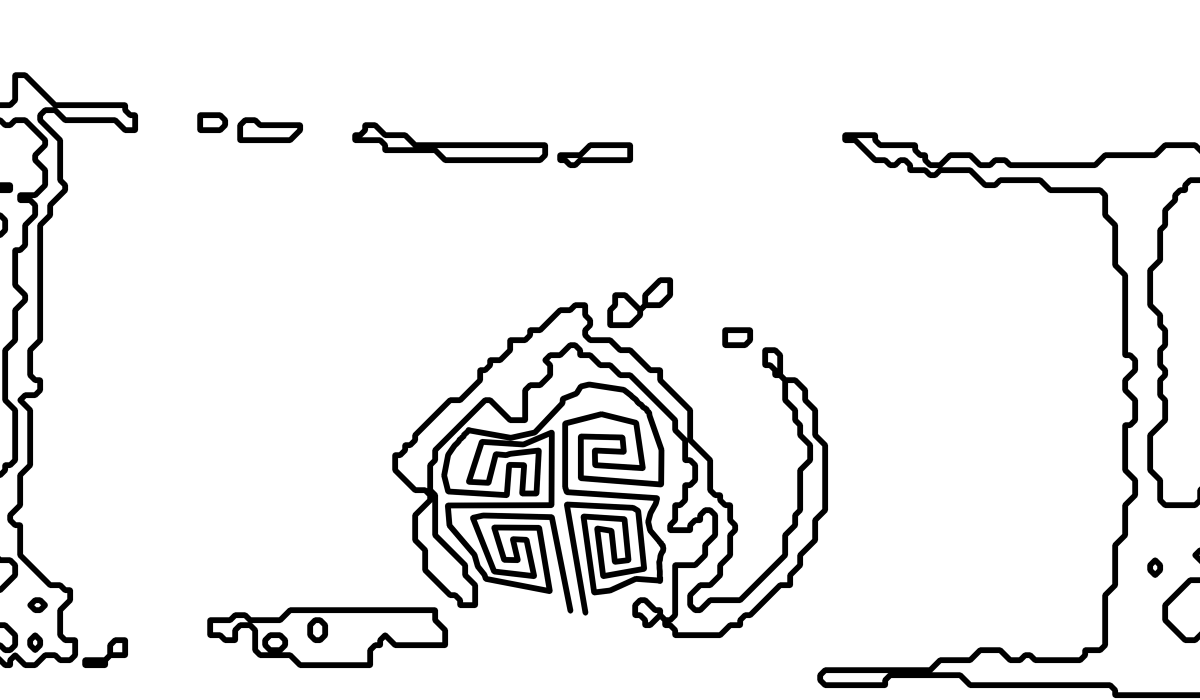
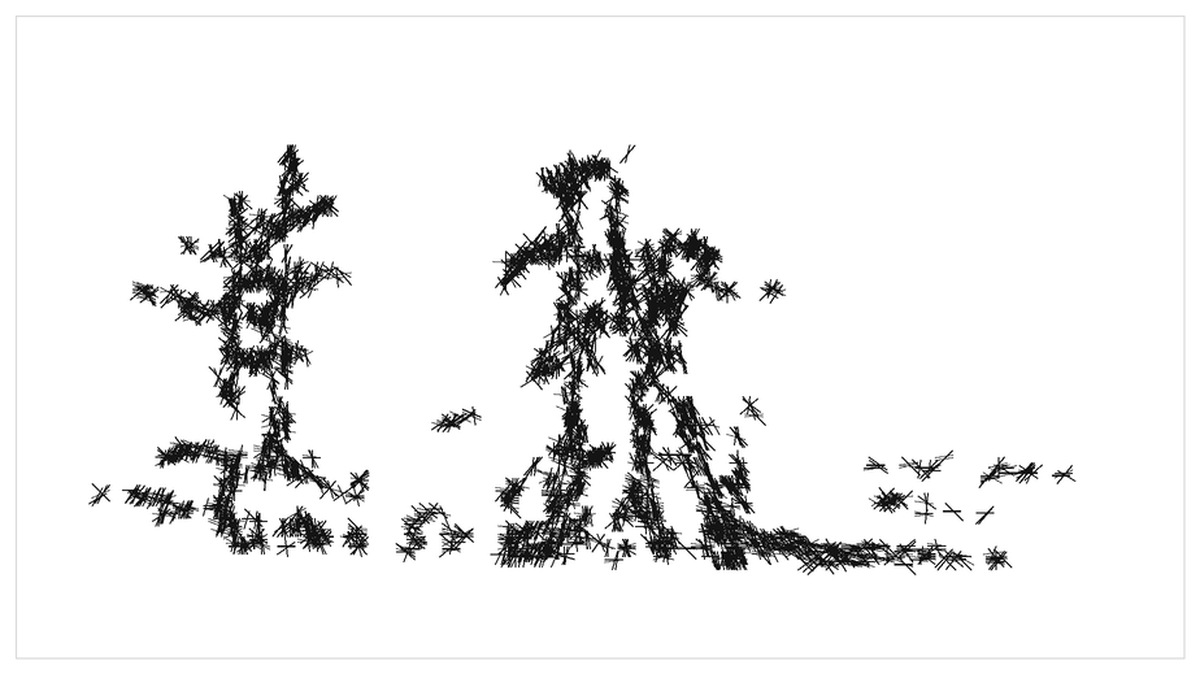
What I saw first · HAEINDO 海印圖
Walk it with your eyes — go in, and come out
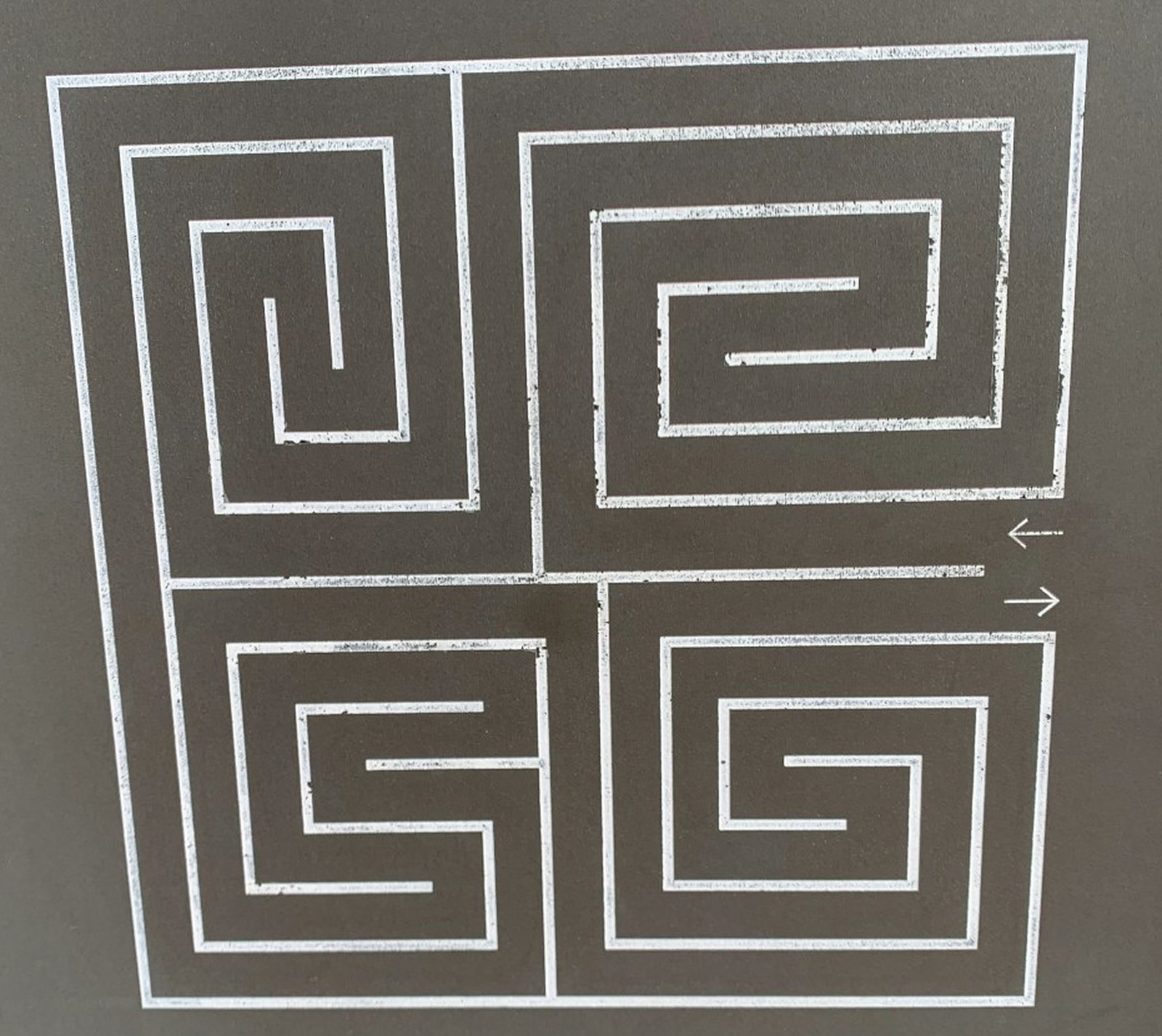
Haeinsa, 3 November 2025 — author's photograph. The two arrows on the right are the way in and the way out.
3 / 43
What I saw second
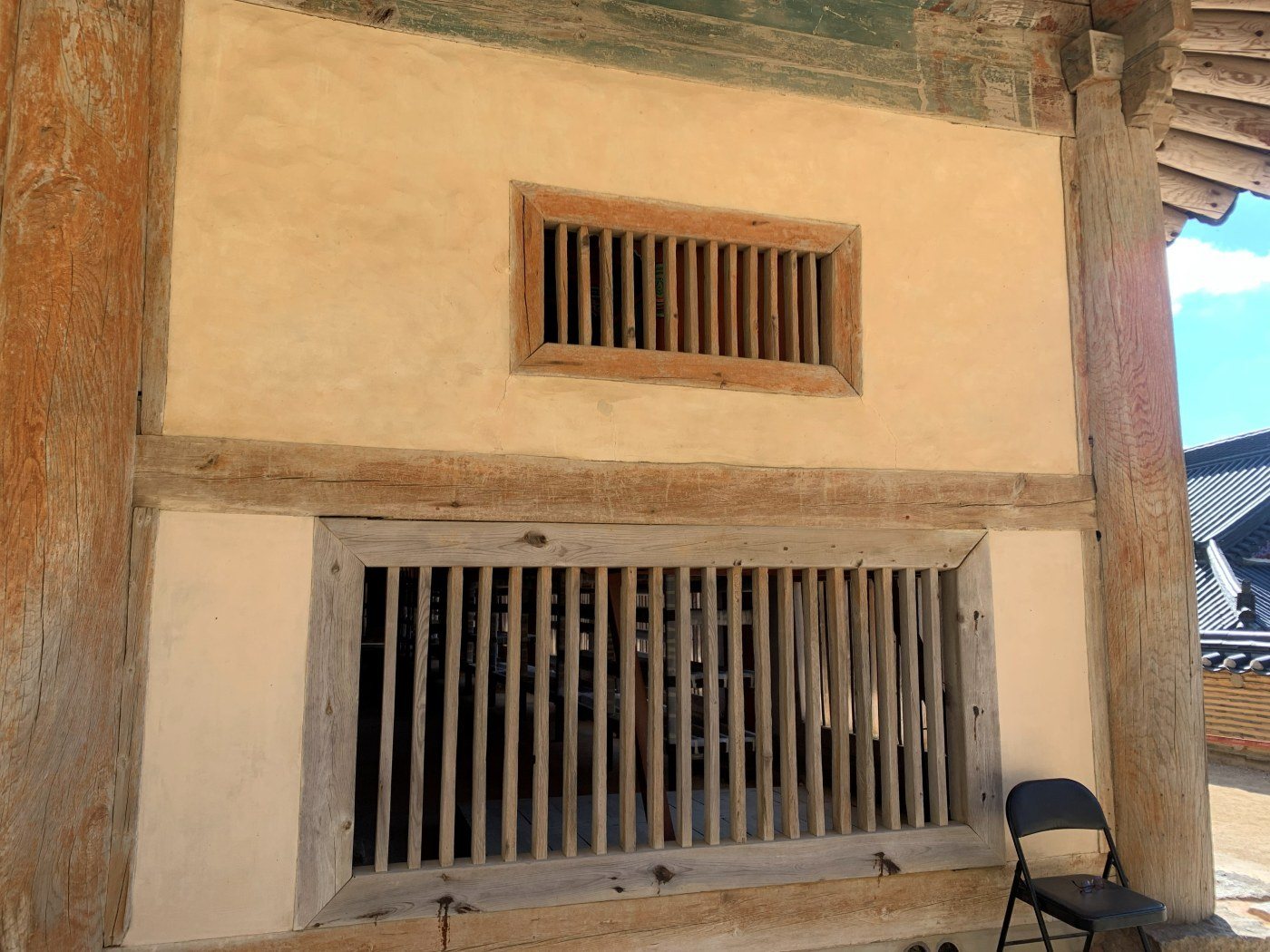
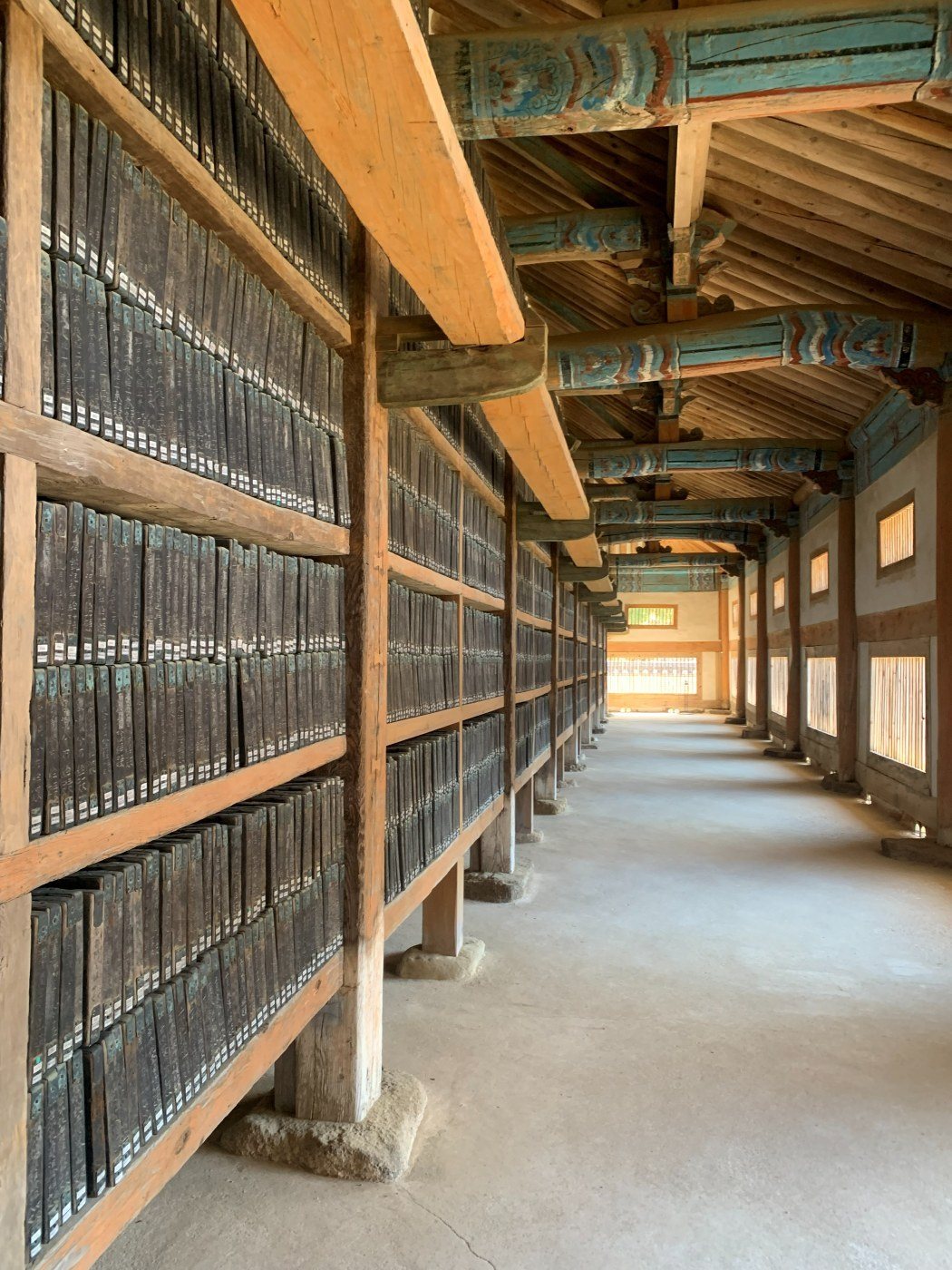
Eight hundred years, kept by wind and waiting
On the same wall the lower window is large and the upper one small — air enters low, turns, and leaves high.
No electricity, no dehumidifier: charcoal, salt and clay in the floor do the rest.
4 / 43
So this school
stacks time.
Every tool here is a tool that layers — thread winds over thread, the pen crosses its own stroke,
the pendulum passes the same place again, and one unbroken line never lifts.
5 / 43
First, what is missing here
No certificate. No grades. No guide.
No qualification — this is not a certification course
No exam, no levels, no assessment
We do not ask your age, your schooling or your career
No group tours and no guide — you travel alone
Then what proves you? One piece of work. Nothing else.
6 / 43
The sentence we say most
A song is a work the moment you sing it.
The recording comes later.
You design. The tools are ours. You only have to stack the time.
And the work is yours to take — only the record stays here.
7 / 43
Who is talking · 30 seconds
Nine books. Over 100 papers and talks. 50 registered patents.
VIZO — 鼻祖 the first one, 飛鳥 a bird taking flight. There is no photograph of my face in this lecture.
8 / 43
About the technique — briefly, and once
We hold the technique.
You just use it.
Push
Not melting — pushing. So clay, lacquer, coffee and food all work
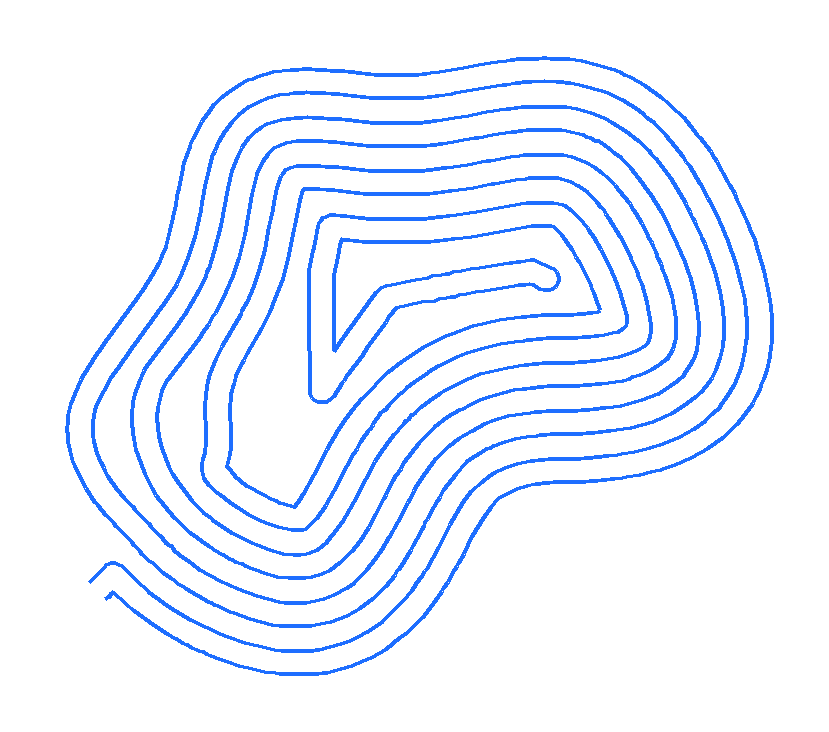
One line
Never break it. The order is the picture
Layer
Pass the same place again and it becomes a layer
Behind those three lines: over 100 papers, 50 registered patents —
2,294× pressure drop at the tip, 1,755 files counted, 0.0198 for clay.
You do not have to remember any of it.
9 / 43
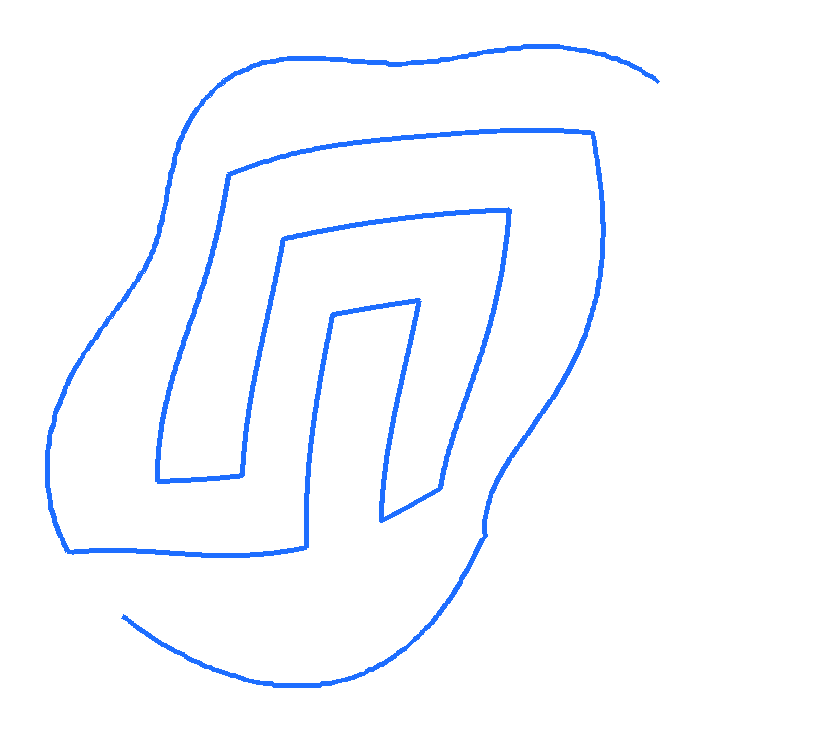
HAEINDO-HAENG · the basic form
In at the floor,
out at the floor
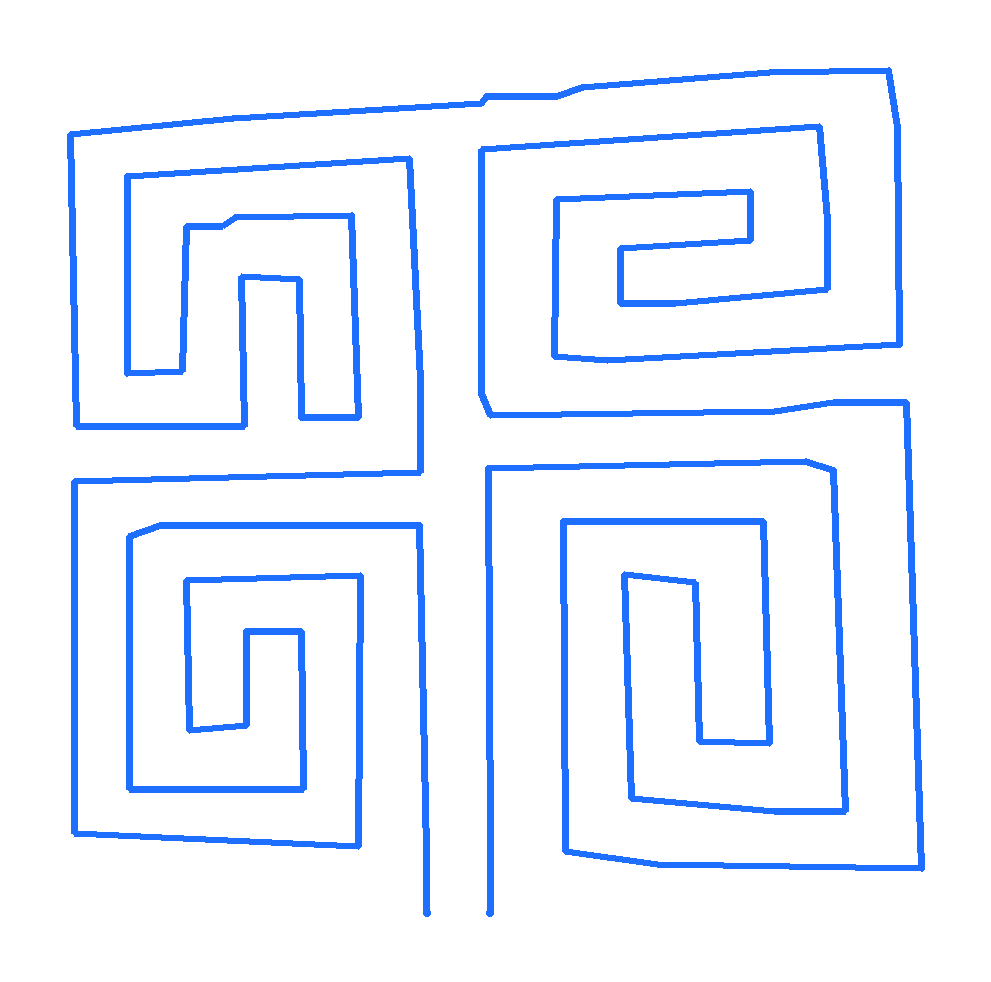
Four quarters joined into one line. The original enters and leaves at the centre — ours enters and leaves at the floor, because a machine draws it.
10 / 43
HAEINDO-HAENG · what comes out
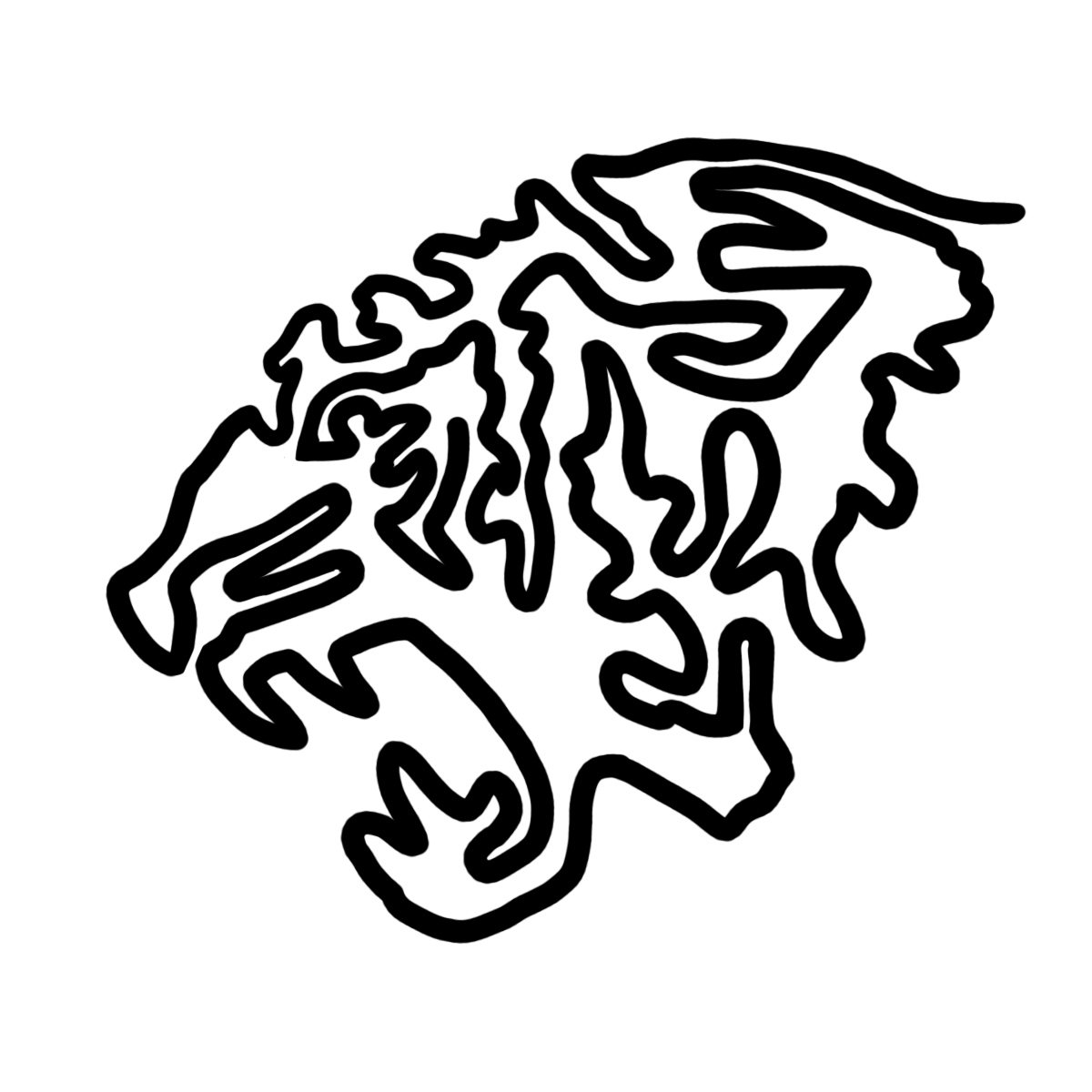
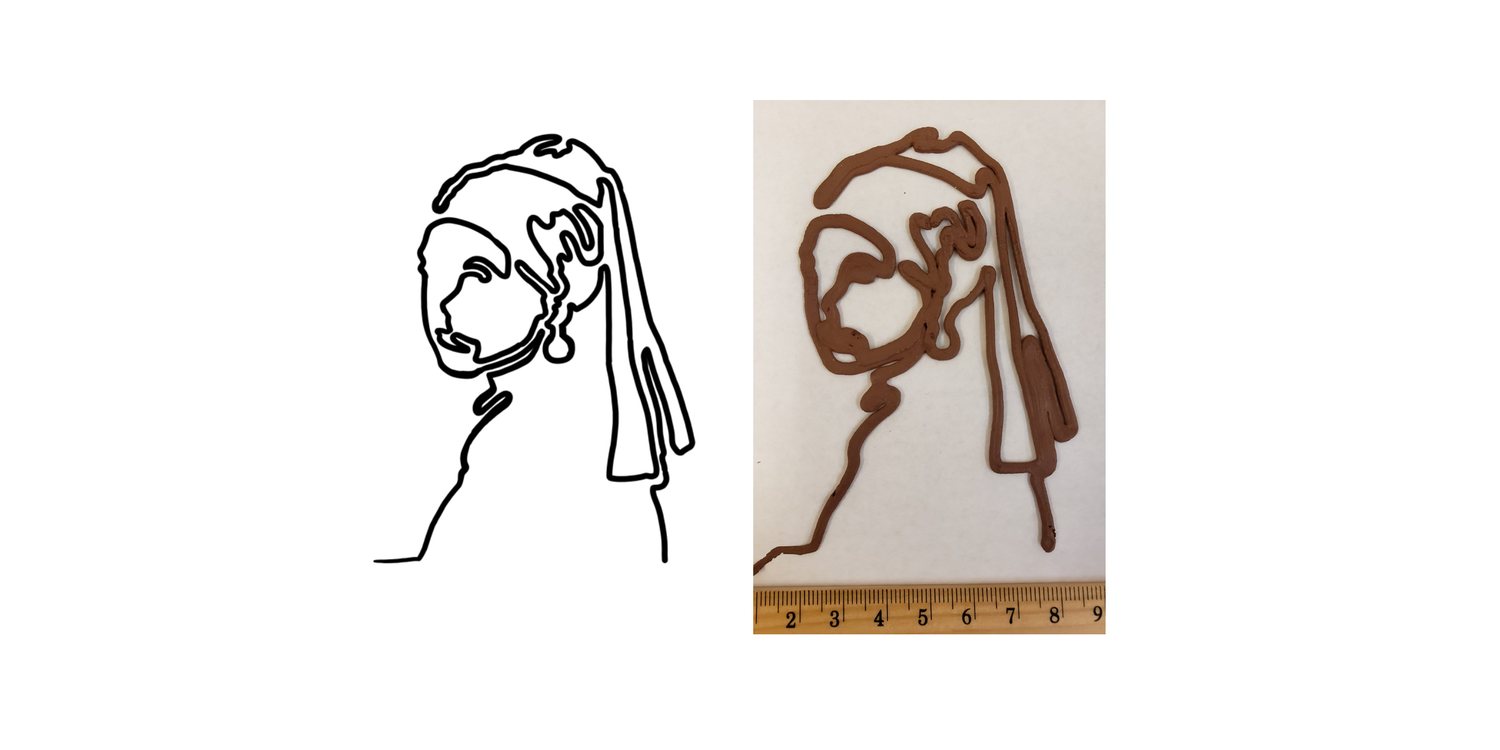
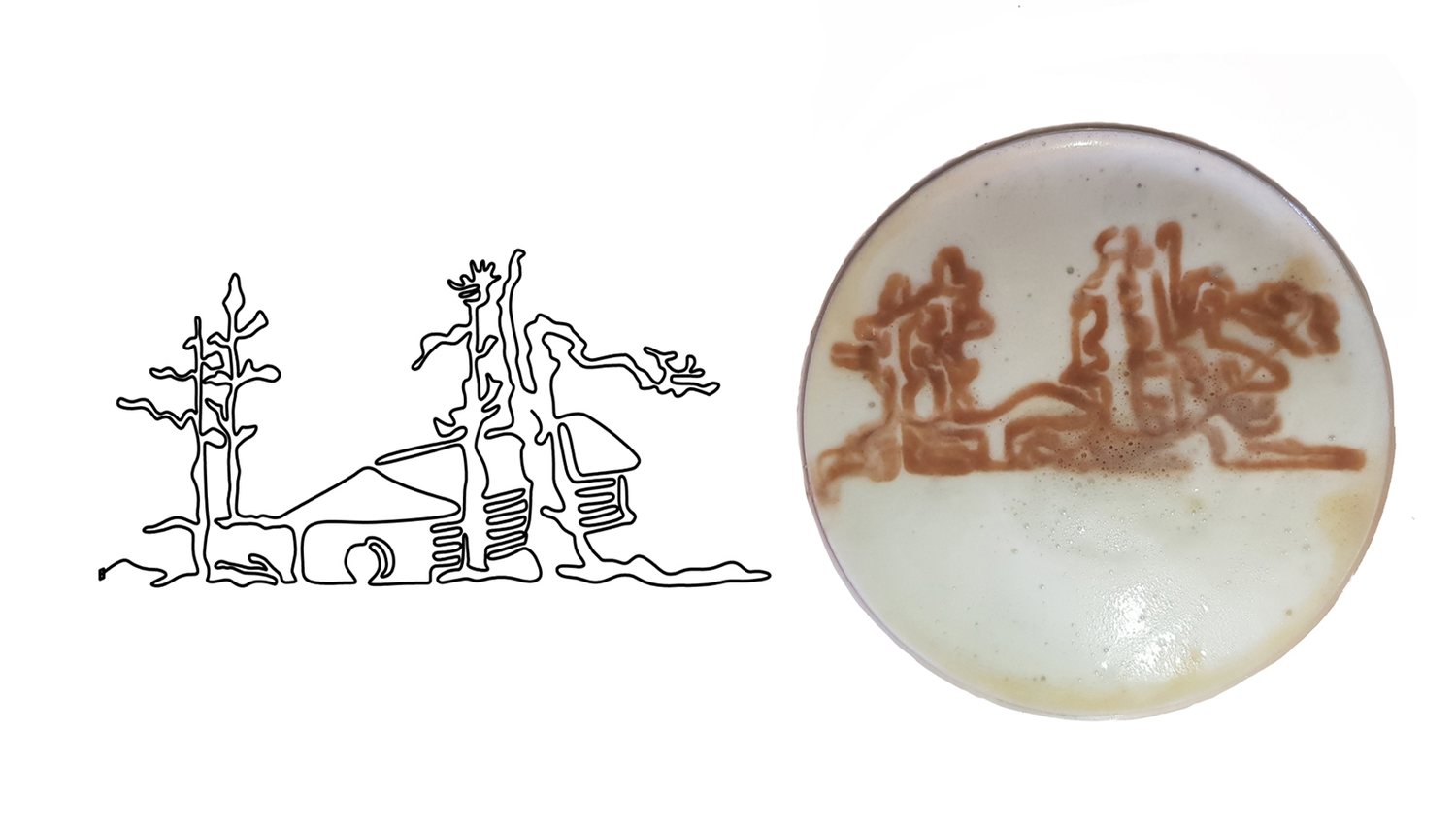
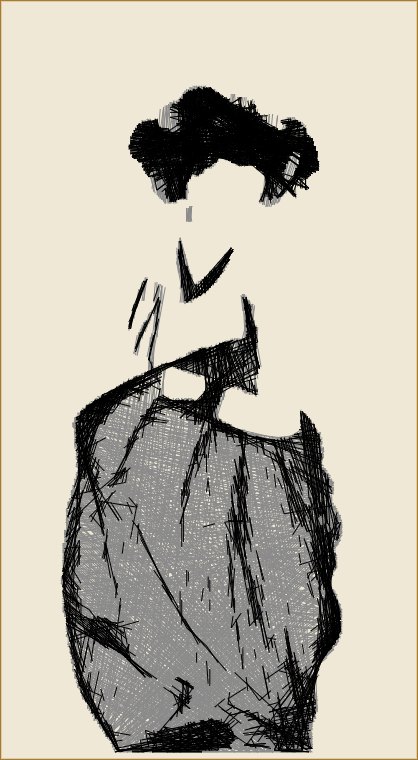
A photograph → one line → clay, and coffee foam
Left — start and finish are a single stroke. Middle — the same line in clay, photographed with a ruler. Right — on coffee foam.
See the work → gallery.vizovizo.com
11 / 43
HAEINDO-HAENG · and then we fill it
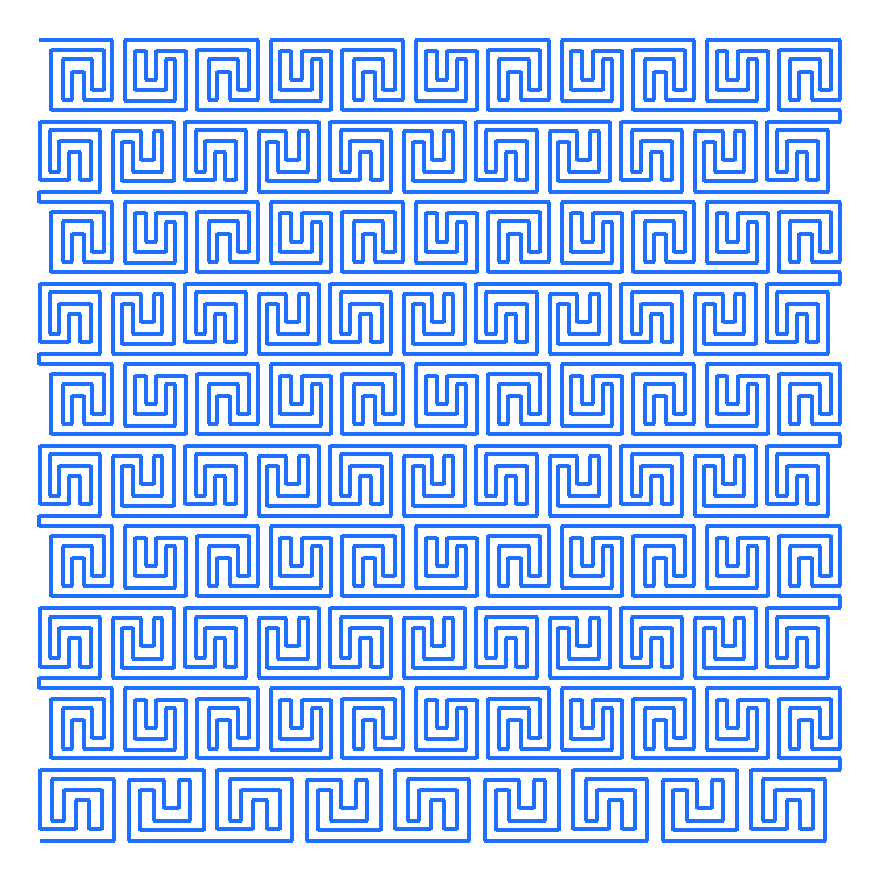
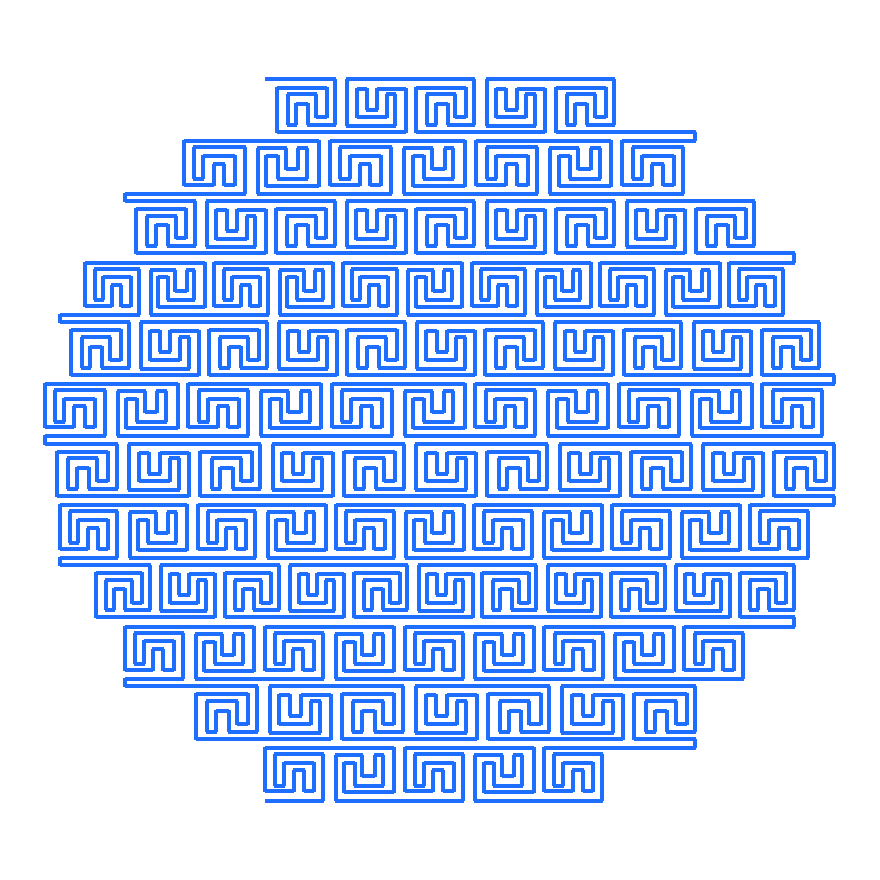
108
cells inside one square — and the whole thing is still a single line
12 / 43
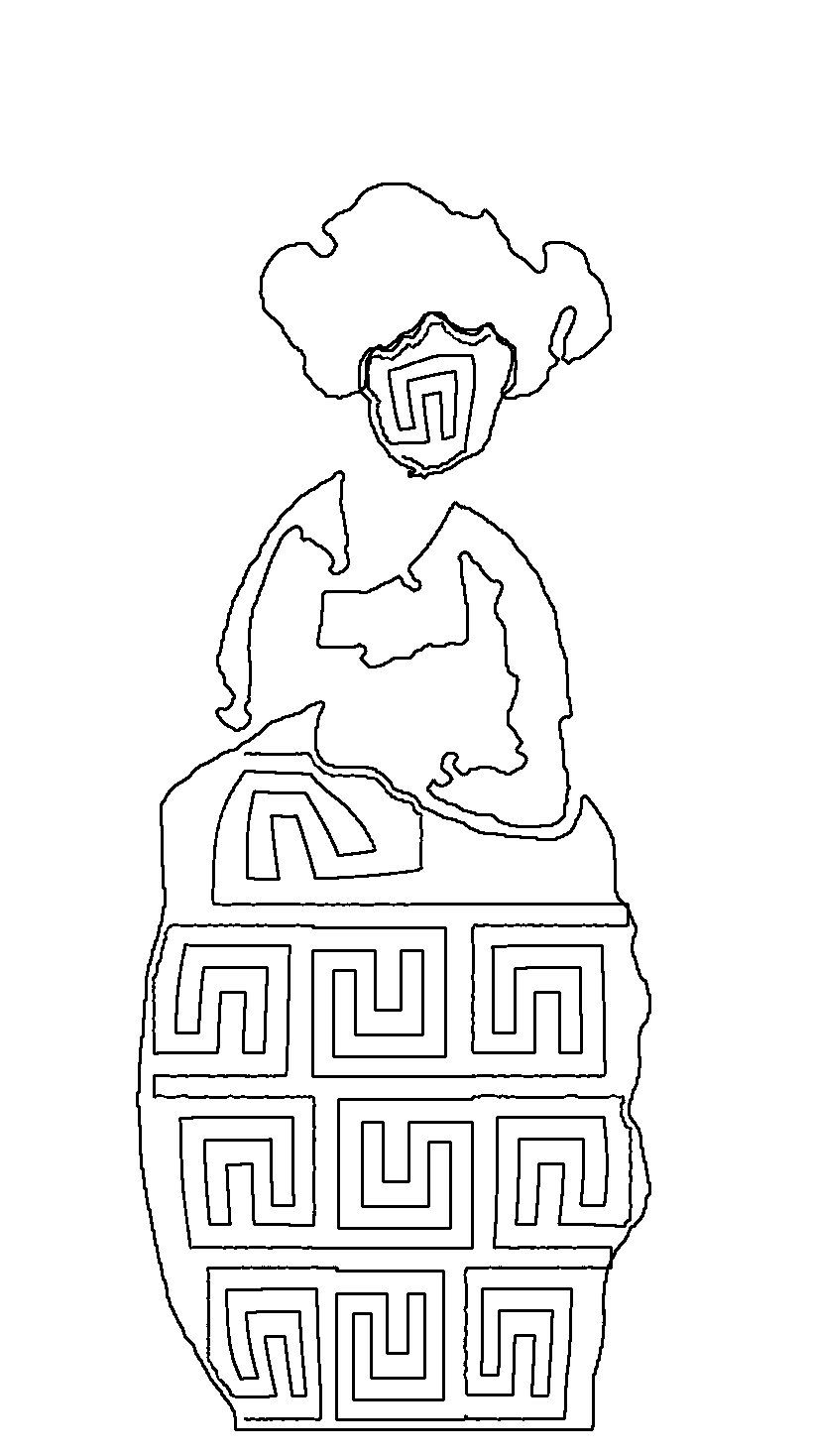
HAEINDO-HAENG · on old paintings
Not filling a gap —
leaving a piece of time in that place
And this is the signature: our work carries no stamp.
A Haeindo-haeng line sits somewhere in every piece instead — one in a small work, four in a large one. The method is being filed.
13 / 43
The school, in one page
Seven courses
01 HAND · hempcrete
The only tool here with no machine
02 PINLOOM · thread
One thread, and darkness made of crossings
03 VIZO PEN
The moment the pen goes down is the stroke
04 VIZO LACQUER
The pen leaves a line; lacquer leaves time
05 VIZO LASER
The most honest tool — burnt cannot be undone
06 VIZO PENDULUM
A line no hand decides
07 · INTERNATIONAL MASTERCLASS — five days in English, five short talks and five long labs.
14 / 43
01 HAND · what it leaves
The only tool here
with no machine
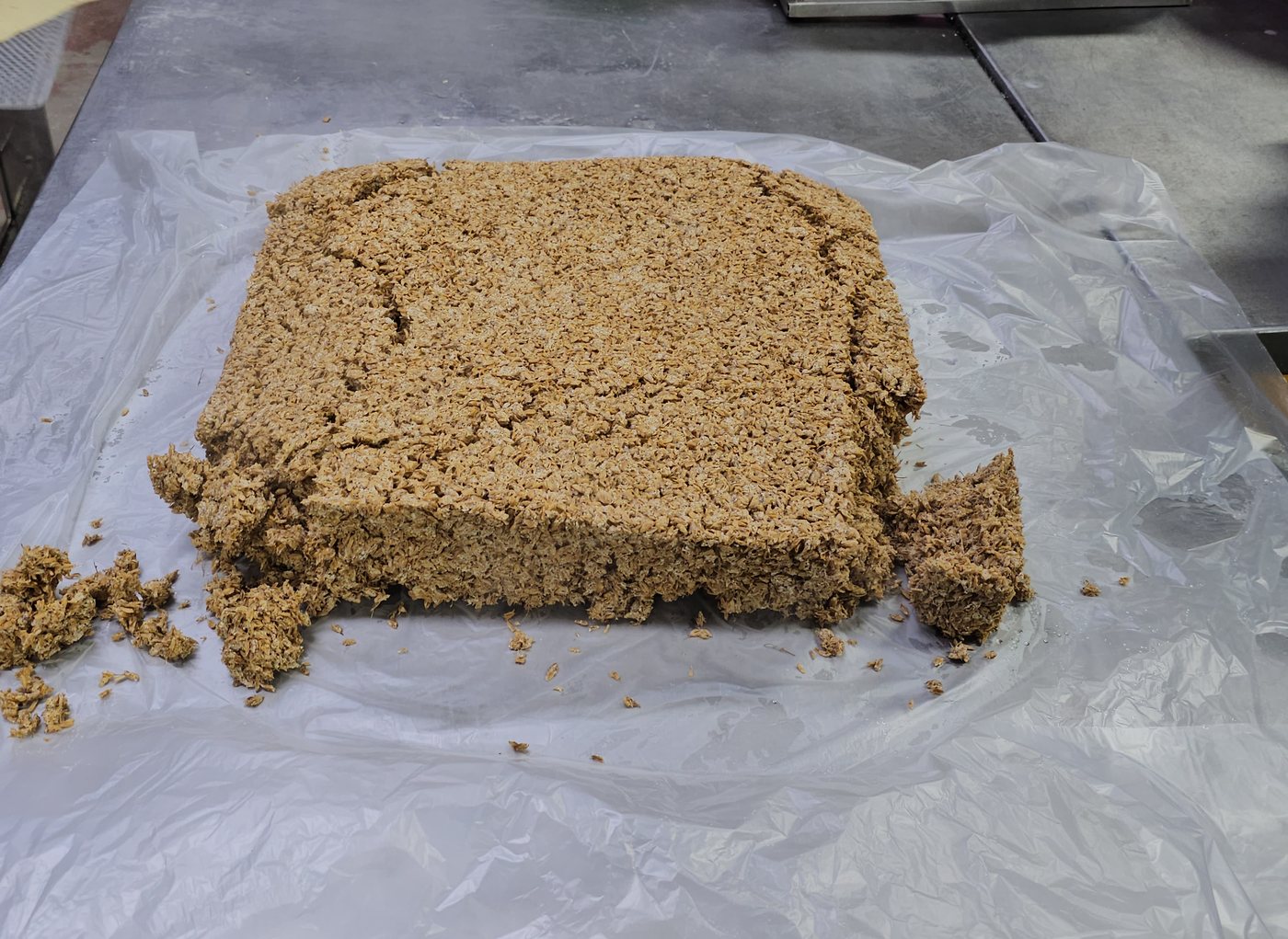
Hemp, rice husk and lime, kneaded by hand and steamed. The surface is never the same twice.
15 / 43
01 HAND · our creative method
Keep the base form — then press it, pull it, and if it will not go, split it and rejoin
This is how we work everywhere in this school — the rule is kept, the shape is not.
16 / 43
01 HAND · where it goes
Waiting is also making
The board takes days. So the course is built around the waiting, not against it —
you start another piece, you go for a walk, you come back.
And then: the finished board goes into the gallery with its own record —
what went in, on what day, made by whom. From there it can be sold.
17 / 43
02 PINLOOM · what it leaves
One thread has one colour.
Crossings make the dark.
Pins around a board, one thread crossing between them — the number of crossings is the shadow.
18 / 43
02 PINLOOM · our creative method
The order of the threads is the drawing
Usualdecide the picture, then find threads that make it
→
Heredecide the order — and let the picture appear out of it
And the same order can leave the thread and be drawn by a pen, or burnt by light.
One decision, three materials.
19 / 43
02 PINLOOM · where it goes
You can hang it, or you can hand it to a machine
The board itself is a finished work. The order behind it downloads as G-code and becomes a pen drawing,
an engraving, or a nail. Same idea, four prices.
See the work → gallery.vizovizo.com
20 / 43
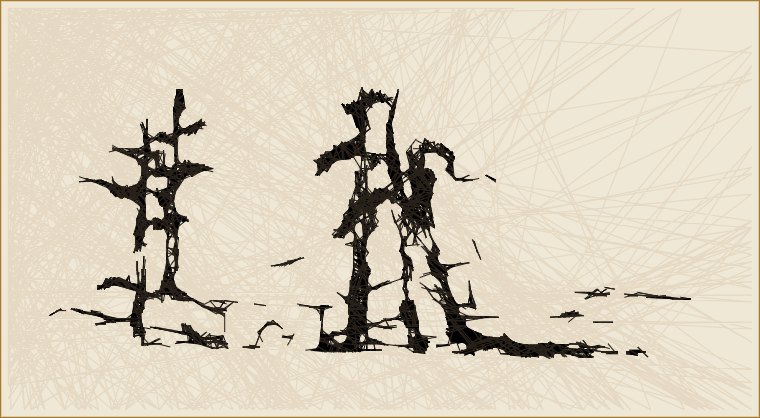
03 VIZO PEN · what it leaves
The moment the pen goes down
is the beginning of the stroke
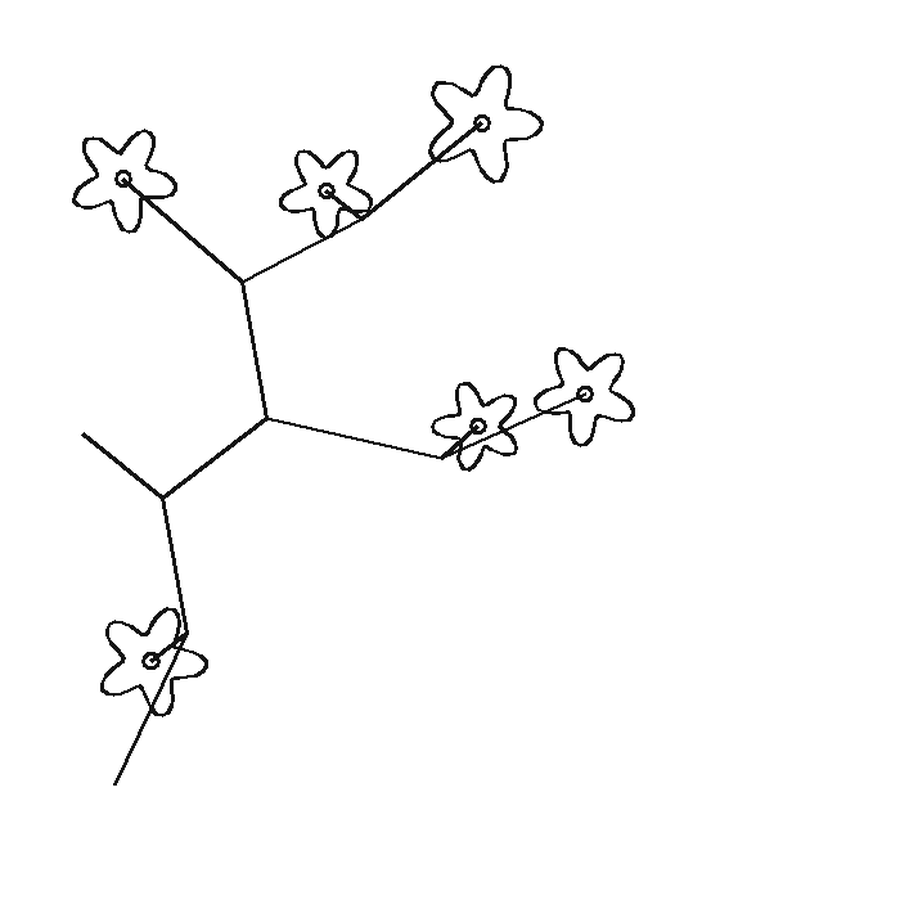
Left — one line. Right — the pinloom's thread order, drawn instead with a pen: it only touches down where the thread would have caught.
21 / 43
03 VIZO PEN · our creative method
Do not draw it well once.
Pass over it again.
Change the colour and cross your own stroke; the second pass is a layer, not a mistake.
We follow the human process, not the optimal one — if a shortcut occurs to us, we mention it and do not take it.
22 / 43
03 VIZO PEN · where it goes
Paper, silk, a wooden board, a wall
The same file changes surface and becomes a different price.
And what the pen draws, lacquer can fill and light can burn.
In the gallery: a pen work carries the order it was drawn in.
Anyone can copy the shape — nobody can copy the record of how it was made.
23 / 43
04 VIZO LACQUER · what it leaves
The pen leaves a line.
Lacquer leaves time.
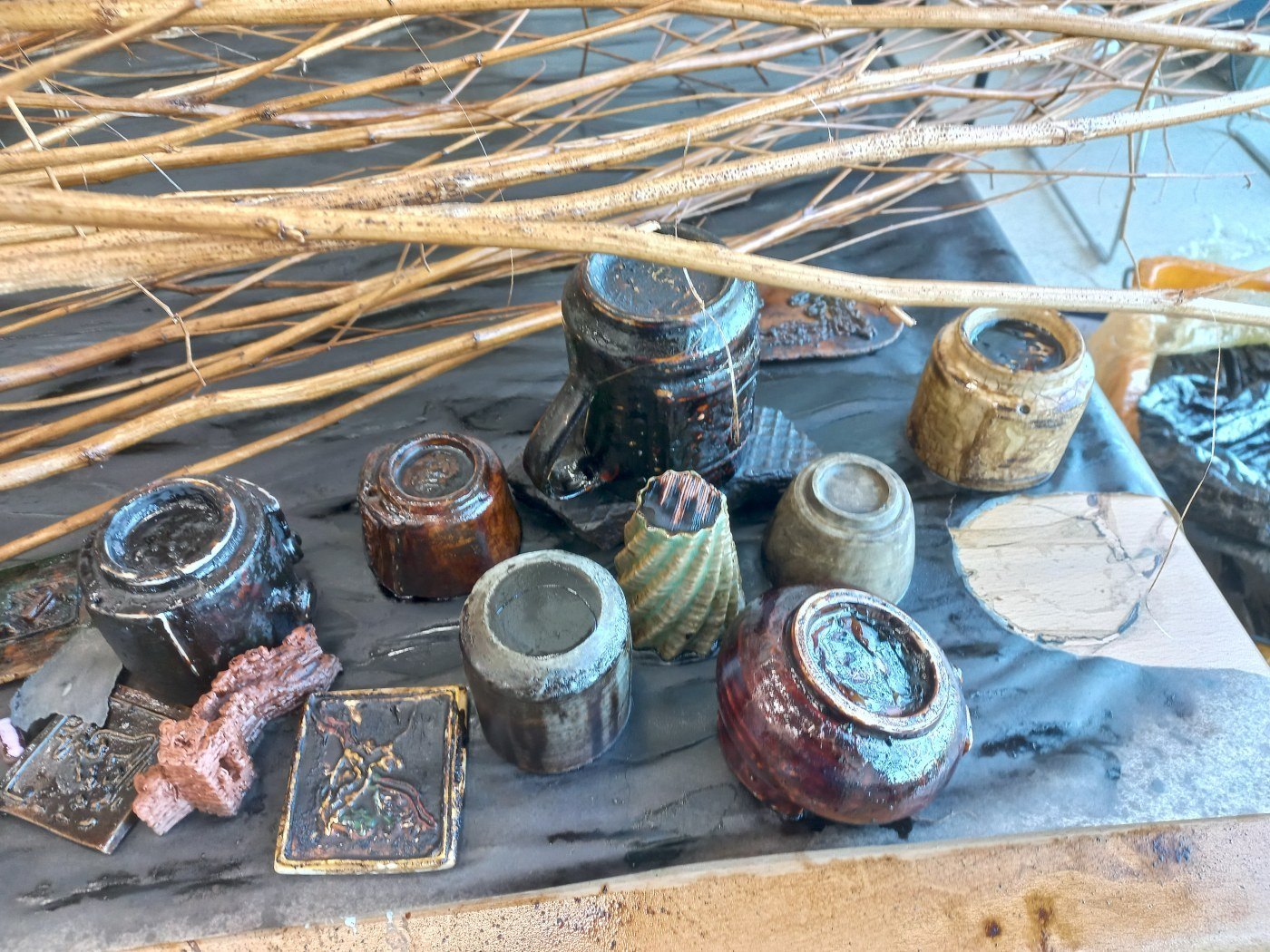
It does not dry with heat. It hardens with humidity and oxidation — it sets better in the rainy season.
24 / 43
04 VIZO LACQUER · our creative method
We design the waiting, not only the path
Speedhow fast the tool moves
+
Waitinghow long before the next layer — written into the file
On the same plotter, only the head changes. The path is familiar; what is new is that the schedule is part of the artwork.
25 / 43
04 VIZO LACQUER · where it goes
A bowl, a board, a hemp stem
Lacquer goes onto ceramic, onto wood, and into a hemp stem — pushed in under vacuum and pressure.
That last one is a material patent being filed.
In the gallery: a lacquered piece lists how many coats and how many days.
That line is why it is not priced like a painted cup.
26 / 43
05 VIZO LASER · what it leaves
The most honest tool.
What is burnt cannot be undone.
Colour is split into layers and each one is passed separately — and where the head hesitated, the mark is darker.
27 / 43
05 VIZO LASER · our creative method
We do not smooth it out. We put the hesitation in on purpose
A machine would keep one speed and give you an even, dead surface.
We write the slowing down where the drawing should feel heavy — draw the feeling, do not copy the photograph.
The same one-line order from the pinloom or the pen can be handed to the laser.
One decision, another material.
28 / 43
05 VIZO LASER · where it goes
Wood, leather, paper, stone
Light engraves what the pen drew and what the thread ordered.
Five-colour work becomes a print edition — and an edition is a business, not a hobby.
See the work → gallery.vizovizo.com
29 / 43
06 VIZO PENDULUM · what it leaves
A line no hand decides
Weight, length and friction draw it. You do not draw — you let go.
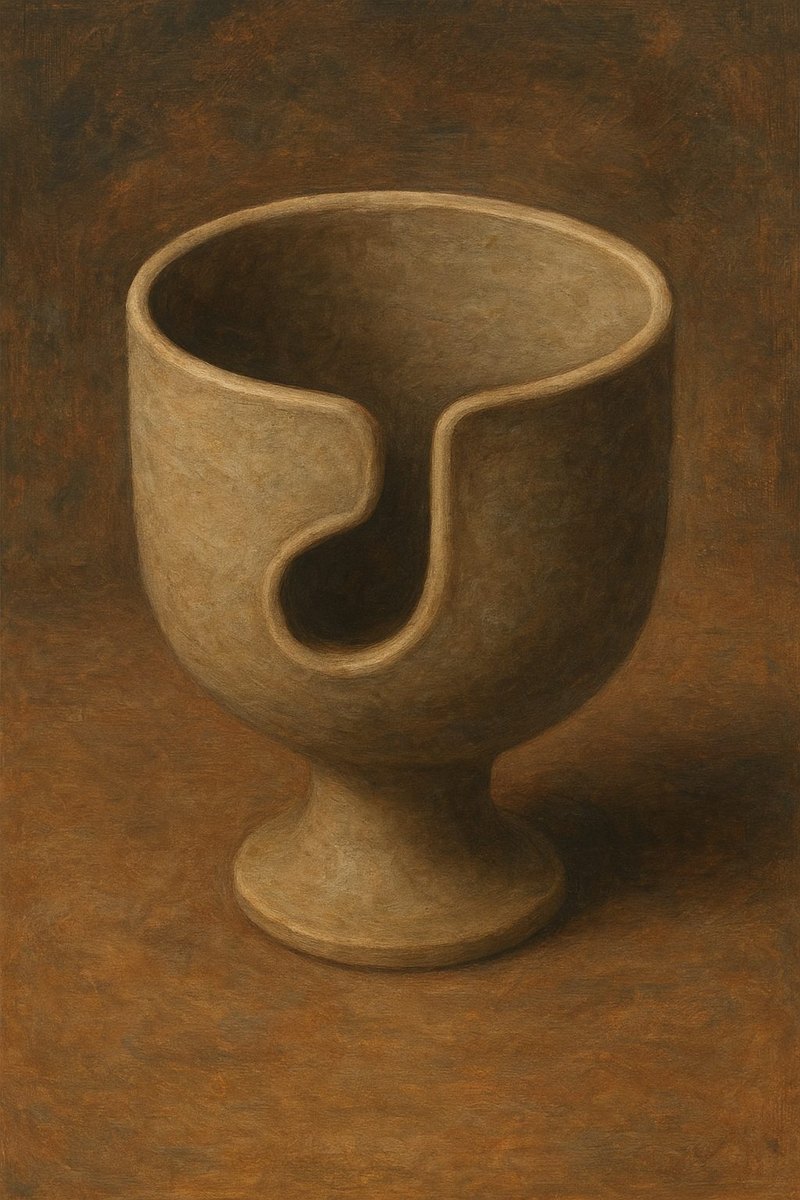
It sits in the same place as the bent pipe inside the Gyeyeongbae — the cup that empties itself.
This tool is still being prepared. I will not pretend otherwise.
30 / 43
06 PENDULUM · our creative method
Set the conditions.
Then stop deciding.
You choose the weight, the length and the first push — and after that the work is out of your hands.
Knowing where to stop deciding is the skill.
31 / 43
06 PENDULUM · the object it points to
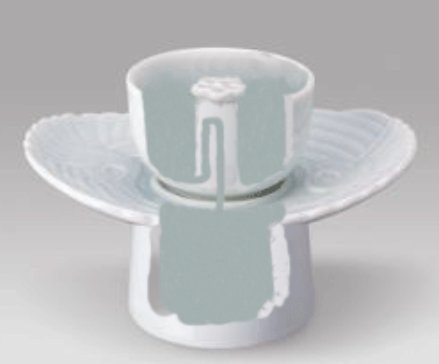
Gyeyeongbae 戒盈杯 — the cup that empties itself
Fill it to seven tenths and nothing happens. One drop past, and a hidden siphon takes all of it.
The cup is in the claims of our patent KR 10-2694442 (VIZO flying-bird printing).
32 / 43
06 PENDULUM · see it happen
Fill → overflow → empty
Left — the moment it passes the line. Right — the same cup being pushed out of clay on our machine.
33 / 43
07 · the seventh course
VIZO ART Printing Masterclass — five days, in English
1
Five short talks, five long labs — the labs are longer than the talks, on purpose
2
The one-line pen and the pendulum · light and thread · clay · jinsa and the Gyeyeongbae · lacquer · the finished work
3
Each day you receive the complete textbook chapters and their sources — never extracts
4
No certificate here either. Instead you touch every tool in the school
34 / 43
07 · and why it is worth the flight
You leave with work,
not with notes
Everything you make in those five days goes into the gallery with its own record —
and it is yours to take, to show, and to sell.
Airfare and lodging are your own. We do not arrange a group, and we do not walk you around.
That is the same rule as our travel: alone.
35 / 43
And then — the part nobody teaches
The gallery is not a showcase. It is where a stranger can buy it
1
Every piece carries its own record — what machine, what settings, what day, made by whom
2
Scan the QR and that record opens. That is what makes a stranger trust it
3
77 pieces are there now — Gyeyeongbae, ceramics, lacquer, hemp, pen, laser, nail, thread, one-line
4
You are not asked to become a merchant. You are asked to let the work be reachable
See the work → gallery.vizovizo.com
36 / 43
What the platform does
It does not tell you what to do.
It writes things down.
What it was attached to · what settings it ran with · what came out · who made it.
Measure once; after that you never measure again — and three months later the record remembers what you forgot.
Data stays in your head and in the finished work. The computer is a road it passes along.
37 / 43
The other half of this school
You walk the road alone
Andong · the Haeinsa valley path · Bagan in Myanmar · Asuka in Japan · Rapid City · El Paso
No group, no guide. Airfare and lodging are your own —
you bring back what you felt alone, and you make it again.
38 / 43
And we do not hurry
退旣時畵 · Toegisihwa
Step back, and time is already painting.
The work is done by time. We only set the place and wait —
the lacquer hardening, the thread crossing, eighty thousand blocks holding for eight hundred years.
39 / 43
Honestly · what is not ready
I will not pretend it is all finished
The pendulum tool is still being prepared
Haeindo-haeng stays closed until the filing — principle and result only
Remote printing works inside one atelier; another city still needs work
The door is not charging yet — we will announce how it opens
40 / 43
Who should come · and what you can do today
Three kinds of people, three first steps
You want to work alone
Classes never suited you — here nobody gathers
Your hands are restless
You need something to put time into, more than skill
You are past fifty
If you stepped back from machines, here the machine translates
1
Touch a tool — the thread and the one-line studio are open today
2
Read one book — VIZO-DO is enough
3
Look at the gallery, and see whether a record changes how you look at a piece
41 / 43
In one line
Alone, one layer at a time,
with time put into it
Thirteen hundred years ago someone laid words along a single path.
Eight hundred years ago someone kept wooden blocks alive with wind.
We hand that road to a machine, and wait beside it.
42 / 43
VIZO ART SCHOOL
The work is the proof
www.vizoedu.com · ask to be told when the door opens
the work — gallery.vizovizo.com
VIZO YOUNG · 鼻祖飛鳥
43 / 43